
What is socialist society like? Long-form comment from an anonymous Yugoslav communist (06/19/2026)
I can only say what it was like in Yugoslavia based on my family's experiences, but different countries do stuff differently. Each socialist country has its specificities, Yugoslavia was characterized by self-management, market socialism and its Unalligned position in the world. That and more all impacts how it functioned. I'll try to stay away from heavy stats and the like.
First of all, you'll see a breakneck pace of development. My grandpa remembered a time when our town was mostly mudhuts and a few bourgeois villas, when my father was born it was already a fully modernized regional capital in industry and administration. That part will likely not be replicated in the West or Imperial Core, but it's important because it brings about its own challenges, which I hope people can imagine.
Work is really different. Better, by almost all criteria. Job hopping is not really a thing, obvioisly you can, but most people never need to. There are expansive benefits, stuff Westeners generally can't imagine, such as solving labor disputes through workers' courts, no or low interest loans from the company, even the famous Yugoslav 13th monthly paycheck. Yugoslav companies had seaside hotels on the Adriatic, and winter resorts on our many mountains, where workers went practically for free. They organized all kinds of stuff for the workers' benefit, from providing courses to interested workers in cooperation with state universities to kayaking trips and such.
Of course, this is all a consequence of the way the economy is actually run in socialism. In Yugoslavia it was self-management (which had massive benefits but also flaws), a fairly unique system, but in virtually all socialist countries it's quite similar. Worker councils. Does that mean that hierarchy is abolished, that the workers can decide absolutely everything, or anything like that? No. But it does mean you are expected to take active part in the running of your company, weighing in on production plans, budget decisions and so on - within the confines of state-provided directives, such as The Plans. Yugoslavia was fairly light on these post-1951, but they still existed. The USSR's Four Year ones are quite famous, China still runs their economy on Five Year Plans, and the DPRK, for example, is currently operating under the 20x10 Policy. Now here's the thing that I think most people from places without socialist experience overlook. Labor discipline still exists, it's just that its character is fundamentally changed. Obviously, it's different when you get a say compared to when you're just a drone taking orders from some capitalist leech. But precisely because you get a say, once a course of action is decided upon, you're expected to do your part, and this will be enforced not merely by your company but *the whole of society* - since production is now a public, not a private, affair.
Continued in replies, maybe, as I have to go do something now.
That point about discipline in work also applies to political life. Generally, I think the old maxim, popularized by Spider-Man of all things, explains the principle applied in both fields quite well: "With great power comes great responsibility". And in socialist, DOTP countries, you cannot refuse this responsibility. Or this power. The entirety of society depends on your bearing it, and wielding it.
See, socialist countries do not delude themselves that politics can essentially be boiled down to circling a number on a ballot every four or so years. Politics is quite simply a daily affair. There is no pretense of neutrality or lack of bias, and your political education will start early in your life. In Yugoslavia, as well as most former WaPact states, children joined the Pioneers. Now, it's important to clarify some things here, because lots of people from liberal societies see this as ominous, especially since their imbecile propagandists often compare the Pioneers to the Hitlerjugend (!).
Nothing could be further from the truth. The purpose of such organization is not merely to teach you to tow the line, but to prepare you for political praxis, applied actions. As such, these organizations have a great deal of autonomy. The Yugoslav Pioneers practically ran themselves. They had their own programs, projects, facilities - Pioneer Homes - and basically got to "meddle" in every part of society, from local libraries and theaters up. At age 15, you graduated the Pioneers and joined the Communist Youth, and it's a testiment to the quality of political education in the Pioneers that the CY, essentially a bunch of confused, hormone-high scrappy teenagers was for the duration of its existence one of the most powerful political forces in Yugoslavia. At the height of its power, they pretty much made the Party bend over backwards to appease them.
And it's the same from then onwards. You might join the Party, but even if not, your political education and praxis is not done. First, the worker councils don't even pretend to be apolitical, and you're almost definitely gonna be part of one. You're also virtually guaranteed to be part of some of the plethora of collective civil organizations whose sum is basically socialist society as such. This could be residential councils, student organizations, women's organizations, minority representation bodies, consumer coops and blahblahblah. What I need to stress is that none of this is as it is in the West. It's not ragtag groups of well-meaning amateurs vying for their place against resistance from outside and within. Society recognizes, incorporates and subsumes these bodies within itself - you're not gonna be able to stick to one thing, be an interest group. You might have the areas you focus on more closely, but, again you deal with, and are dealt with by, the whole of society. It's not formalized lobbying. It's agitation. Praxis.
If your country runs some form of mandatory military service - which most socialist countries did - then, you guessed it, political education continues there.
Now it's important to address what is often the most controversial part of politics in AES states.
All of this stuff, the fact that you're gonna speak and your voice is going to be heard, impact things, have weight - IS THE EXACT REASON YOU CANNOT SAY WHATEVER YOU WANT. Bourgeois dictatorships only tolerate so called free speech - inasmuch as it even exists - because nothing the people say in there matters. Let them rattle on against the system, let them vent a while, who cares? But in socialism you cannot do that. Let's take an extreme example that'll nonetheless illustrate my point. If your voice will help influence the decisions made by your factory council, YOU CANNOT ARGUE FOR PRIVATIZING THE FACTORY AND DISMANTLING ITS COUNCIL. You won't merely be thrown out - you'll be taken in by the police to give a statement, put under observation, quite possibly punished, and quite possibly harshly so.
In such systems, almost everyone will hold some office, some position of authority, for at least a while, at some point in their life. SO YOU CANNOT DO WHATEVER YOU WANT. You may propose experiments, apply guidelines in innovative ways and so on, but once the decision is made, no matter how much you may disagree with it, YOU STICK TO IT. If you don't the result won't be a lengthy process of boring bureaucracy and stupefying paperwork. You'll be denounced, promptly removed from office, and sanctioned. This might come through formal channels, but it might not. Say you became a director in your agro co-op who somehow betrayed the trust of your coworkers. Who do you think will stop them from quite literally throwing you out the window if they so please? The cops? You wish. At times, this became excessive. The Cultural Revolution, for example. But going too far from this style of politics is what sowed the seeds of Yugoslavia's eventual demise. The State and the Party are tasked with walking the fine line between these two poles, and they don't do so through formal legislation and tricks of procedure, they do so through direct action.
Again, praxis. I bet even reading the words "direct action" when attributed to formal state structures strikes Westeners as weird. What can I say, welcome to the People's Republic.
Remember - with great power comes great responsibility.
It's time to redo this website again, to make posting easier (06/12/2026)
I hope to overhaul this website, at which point it probably wouldn't need to change again for some years.
It needs a cleanup on the layout. Maybe everything should just have absolute, fixed positions.
It needs RSS feeds going out on posts, so I can get friends to subscribe to it, and subscribe to their feeds, etc.
But what this site needs most is for me to like, post at least once a month... I think of a post every week, but rarely post.
This would make a sick FPS map (02/09/2026)
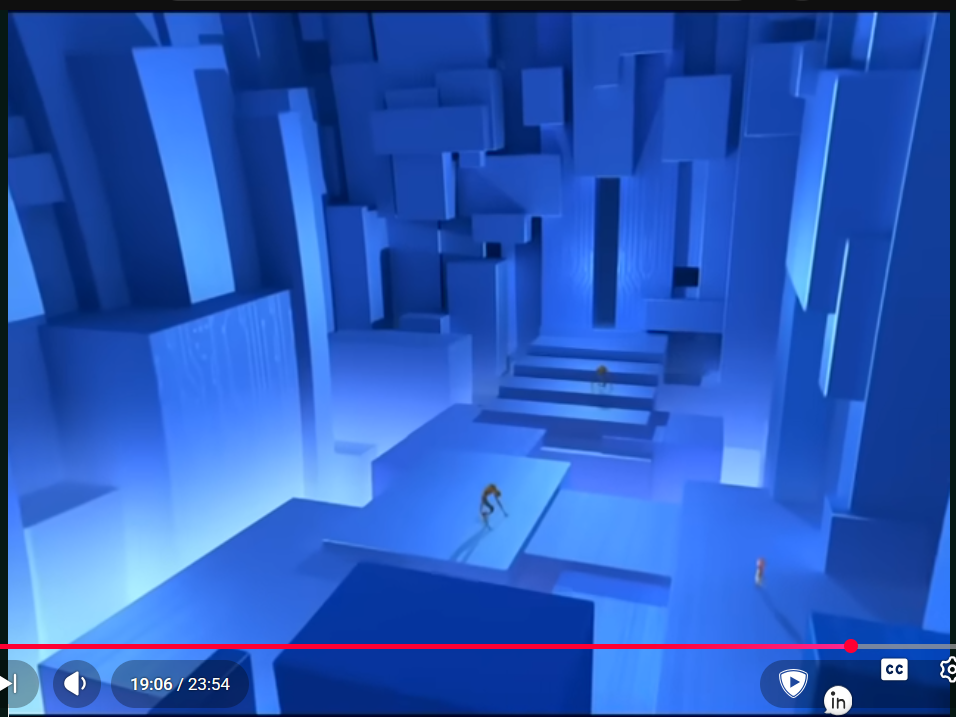
I have wanted to make a Halo map for years, and this could be a reference for an easy one to make.
Still, maybe it would be better to make it for Unreal Tournament or that one really good Sauerbraten fork with the wallslides etc.
from code lyoko s2.
I'm thinking the map would have a ceiling with big slit sunroofs, some tunnels in the walls, and some teleporters.
Copyright is dead and the capitalist system probably can't progress to something better. (02/08/2026)
Our system for compensating creators relied on very artificial and arbitrary means. Trying to force information, which is free to duplicate and almost screams to be shared freely, is failing.
The capitalist mode of production is now a fetter on the production of information / goods that can be represented in data.
Under an early socialist system in which money is used, I think this problem could be solved by the dispensation of huge (relative to now) amounts of funding to the arts and sciences. Information workers would no longer need to produce a commodity like a book or album to sell, they would just be paid to produce because society has determined collectively that we want what they are making.
Further, the elimination of cost of living crises, through economic planning and the expropriation of exploiters and speculators, would set the foundations for an artistic renaissance even outside the full time creator category. Free time and cheap essentials are the ingredients for a creative renewal.
don't you focus on America too much? (7/17/2024); an unfinished skeleton of an essay
A note about Canada
Canada is junior partner to Amerikkka. Whatever evil emanates from Washington, the Ottawa regime is fully implicated as an integral component to the empire. The Ottawa regime has loyally furnished raw materials and supported foreign policy goals for Yankkkee imperialism since it arose.
So there is no handwringing here. As Canadians, for all geopolitical intents and purposes, we practically live in an American state. We are not outside the imperial core and have no illusions about this. Canada is close to, if not still a part of, the belly of the beast.
Primary contradiction
(Bring in a description of the concept of the primary contradiction in materialist dialectics.)
The argument against focusing on Yankkkee imperialism
That there are many imperialist powers, and many causes of global problems, and you can't "just pin it all on the US", or some variation.
The first problem with this argument
Assumes that there must always be multiple fuzzy causes of some phenomena, or at least social phenomena.
In the Nahuatl world, the Triple Alliance was once the singular oppressor
In Europe, Rome was once the singular oppressor
In the world, England was once the singular oppressor
An empire on which the sun never sets, the hideous crimes of Rhodes, Churchill, and others.
Since the mid 20th century, it has been Amerikkka
Postwar Boomer golden age, Bretton-Woods, a military base in every country, and often more than one.
The world seems to be trending towards multipolarity
American decline, the national rebirth of China, and Putin's Russian Federation are the new great powers.
Geopolitical divisions might be a prerequisite for revolution
Lenin's notion of a world-historic opening or opportunity;
The history of technology and its role today
Note that my letter makes zero use of LLM or other “AI” technologies as a matter of principle. I see this as necessary for respecting the dialogue between people.
What is technology, really?
The introduction of new technology is a political and economic phenomenon, but it is often imagined as something above us, as inevitable progress. To paraphrase the social historian David Noble, technology seems to have a life of its own, when we ignore the process of its promulgation and submit to it. It seems to follow a straight line, when we yield to its masters. It seems to impact society from outside when the human aspect is ignored or obfuscated. Against this, we must see technical development as politics.
Computing as we know it is entirely a military invention, and is a field of technology employed first of all in command and control. It shifts leverage from workers to management, and thus from labour to capital. The same was true of the first textile production machines, which reduced the skill required, and therefore the worker’s leverage, in the production process.
Private property of the means of production means that tools (of all kinds), machinery, land, and buildings (those land and buildings used for commercial/industrial economic activity) are not managed in a democratic way. They are owned by individuals who do not need to even lay eyes on them for it to be “theirs” - and not the property of workers tasked with using them, nor the society relying on and affected by their use. Private property is distinct from personal property, which describes possessions from your home to your toothbrush, and the absolute vast majority of people worldwide have no private property. Conflating the two serves to obscure the difference and justify private property.
Our economy is composed of enterprises that range from petty fiefdoms to huge productive dictatorships, from local mechanic shops to Walmarts, all with unelected, unaccountable, and truly authoritarian leadership at the helm. Their focus is profit, the growth of their capital, and when they are restricted from doing harm to people or the natural world it is because of the centuries of political struggle by people like us to set and maintain limits. Still they collude and commit all manner of crimes.
“How will people support themselves?”
Because we are dependent on leasing our ability to work, our situation becomes more precarious when the need for labour-power decreases. Increasing technological productivity does not benefit us, it benefits the class that owns that technology, growing their capital. Over the last 200 years in the capitalist world, as capital grew, the amount spent on labour power grew, but became a smaller and smaller proportion of capital employed.
Now we are in a stage of capitalism defined by monopoly, and are gradually running out of things to profitably invest in. Consequently, finance capital overtakes industrial capital, and war, conquest, and destruction become more and more important forms of investment.
We have material abundance but a system which is structured to maximize corporate profits rather than meet social needs. Therefore what looks rational and organized is really irrational, a product of happenstance, and an unsustainable future. In 1930, Keynes dreamt that revolutionizing productivity would lead his grandchildren’s generation to work less and less, such that by 2030 we might have a 15 hour work week.
Was he mistaken or intentionally misleading? This hasn’t happened and instead productivity increases pile on corporate wealth. Similarly, we are not in a position for automation to make us wealthier and more secure, but actually to do the opposite. If social production was socially owned, and benefitted us all, new steps in automation would be cause for celebration.
“Do we need universal basic income (UBI) to sustain people once their jobs are replaced by technology? What are people going to do to keep themselves occupied?”
UBI as cash payment has been demonstrated by social scientists to change lives in a marked and positive way. If it were rolled out, life would get a fair bit better for many people in many ways, but significant problems would remain unsolved. It does not solve the problem of working class precarity manifested in dependence on wage labour, just pad some of its evils, like other welfare measures do.
A full rollout would boost consumer spending, very important in wealthy, monopoly-capitalist countries. Through a more critical lens it can be seen that this amounts to a cash transfer to landlords, mortgage holders and consumer goods oligarchs like those helming Walmart, Amazon, and Loblaws. We would get relief from UBI as much as we’d be able to pass it on to those enterprises that dispense their food, housing, and other needs. We’d also be able to spend a bit more time and be more selective searching for a job.
When the chips are down, UBI is vulnerable. It would be treated as a threat by political hegemony. When reaction sets in, payments could be cut, or held in place so that inflation decreases their purchasing power. We need to elevate this to a struggle for human rights, to make it something bigger and harder to roll back.
A universal basic needs guarantee is the goal I propose we set for ourselves, one that can grasp the problem by the root. Instead of mere social assistance, we could strike at the profit motive and take back elements of our humanity. We could secure education, adequate housing, all basic needs including health, leisure time, and dignified work for the able, as rights of everyone in our society. Democratic economic planning mechanisms could replace the autocratic petty fiefdoms of profit-seeking businesses in all these sectors.
“The cost of living and the housing crisis are definitely part of the labour shortage, but they are just a symptom of a greater issue — the world is getting older and we are running out of people to staff all kinds of jobs.”
First, I would like to consider the framing of the labour shortage. There are plenty of working people, working plenty of hours. Jobs that go unfilled are not paying enough to attract them. Perhaps they consider their starting pay to already be high, but if the job is going unfilled, it’s your move as a buyer of labour-power to go higher if you want to get it. Wages are determined by both political and economic developments. At the same time the experience of job seekers is that of making dozens or hundreds of applications, going through tedious, labyrinthian web apps to submit applications, to be ghosted far more often than rejected, and rejected far more often than interviewed!
The “world” - global capitalism - should be expected to gradually employ fewer and fewer people. The role that human labour-power plays in productive activity has been diminishing gradually since at least the Industrial Revolution of the 19th century emanating from England. As said above, as capital grows, the amount spent on labour power initially grows, but becomes a smaller and smaller proportion of capital employed, and will eventually decrease absolutely. The fact that resources spent on human’s wages were more and more outnumbered by resources spent on constant capital (raw materials, machinery, equipment) has been obfuscated for a while by the fact that markets grew such that real wages and the wage-working part of the world’s population generally grew.
This growth will run out sooner than later!
Capitalism is no longer a dynamic system, and globally the rate of profit is in decline. At the 2023 conference of the Italian Association for the History of Political Economy, social scientist Tomas Rotta presented his findings that the global rate of profit has indeed been in sharp decline since the genesis of capitalism, as observed and predicted to continue by Karl Marx in his writings and particularly in Capital. Another scientist, Esteban Maito of Argentina gave the following data in his paper “The Historical Transience of Capital” on this subject.

As time passes we should expect to see more and more difficulty for small business, increasing malaise for big business, and vitally, real precarity and hardship for the working class, by which I mean all those who work for a wage to sustain themselves and do not sustain themselves by owning and profiting from capital investments.
The threat of mass unemployment is built into the logic of capitalism. No economic system is eternal, not slavery-economies of antiquity, nor feudalism, nor capitalism. It must end, either in the reconstitution of society into something better, or our common ruin. Capitalism will not eventually fix itself, but it will eventually destroy itself.
There is an alternative.